All Posts By

Admin Codicis

UCB Tarija together with the CODICIS project organize the symposium “Path to the recovery and preservation of the historical documentary heritage of our people”

By News

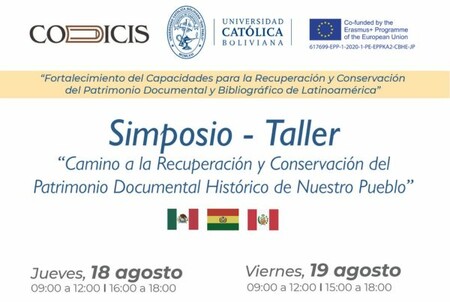
With the aim of instilling the value of archives and heritage libraries in our Tarija society, the library of the Bolivian Catholic University “San Pablo” Tarija Headquarters, with financing from the European Union, organizes the Symposium “Path to the recovery and preservation of the historical documentary heritage of our people” to be held on August 18 and 19.

The symposium is aimed at teachers, administrators, archives staff, library staff and final year students of the educational units of the city of Tarija.

The purpose of the meeting is to promote in the participants the management of the documents that narrate the history of Tarija, so that the essence of the historical value of our town is not lost. In addition, the objective is to train those people related to the conservation and management of archives and heritage libraries, through the “Training of trainers” course.

The UCB is part of the CODICIS project for the recovery and conservation of the documentary heritage of Latin America, which is made up of a consortium of 5 universities from Peru and Mexico and two universities from Spain and Italy.

This project is funded by ERASMUS of the European Union and aims to train professors from universities in those countries for teaching in the recovery, conservation and authorization for research of important heritage collections.

June 23, 2022

See original note: Here

UCB Tarija together with the CODICIS project organize the symposium “Path to the recovery and preservation of the historical documentary heritage of our people”

By Press releases

With the aim of instilling the value of archives and heritage libraries in our Tarija society, the library of the Bolivian Catholic University “San Pablo” Tarija Headquarters, with financing from the European Union, organizes the Symposium “Path to the recovery and preservation of the historical documentary heritage of our people” to be held on August 18 and 19.

The symposium is aimed at teachers, administrators, archives staff, library staff and final year students of the educational units of the city of Tarija.

The purpose of the meeting is to promote in the participants the management of the documents that narrate the history of Tarija, so that the essence of the historical value of our town is not lost. In addition, the objective is to train those people related to the conservation and management of archives and heritage libraries, through the “Training of trainers” course.

The UCB is part of the CODICIS project for the recovery and conservation of the documentary heritage of Latin America, which is made up of a consortium of 5 universities from Peru and Mexico and two universities from Spain and Italy.

This project is funded by ERASMUS of the European Union and aims to train professors from universities in those countries for teaching in the recovery, conservation and authorization for research of important heritage collections.

June 23, 2022

See original note: Here

The San Pablo Catholic University, Arequipa-Peru held an international symposium on book conservation management and ancient documents

By Press releases

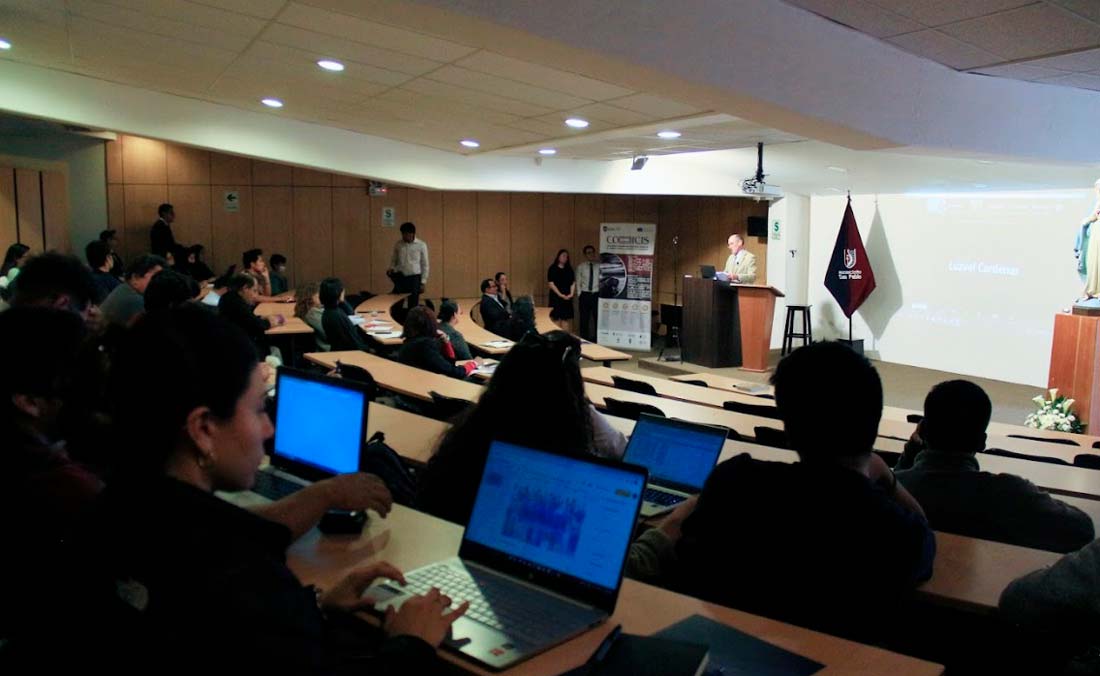
The San Pablo Catholic University (UCSP), in November 2022, received two leading experts on bibliographic heritage, this during its Research Week. They participated in the Symposium of the Codicis project, which is led by San Pablo and seeks the preservation of documentary heritage, through the training of personnel for its management, recovery and conservation.

They are Mercedes Salomón Salazar, director of the historical library 'José María Lafragua', of the Benemérita Universidad Autónoma de Puebla (Mexico) and Gerardo Trillo Auqui, expert in Library Science, with vast experience in the National Library.

Mercedes Salomón announced the work she has been doing in Mexico, to digitize the old books 'From the shelf to the web and back to the shelf'. In that regard, he clarified that this is one more step in the conservation of documentary heritage, but it is not all. “Digitization must be carried out following conservation standards. Furthermore, the files expire and you have to be changing and updating the system where the repository is located,” said the specialist.

Although the great advantage of digitization is that researchers can consult any document, without having to go to the library or mistreat the document, for this to be correct, the books must be inventoried and cataloged depending on their age, their rarity, among others. other characteristics that make them unique.

Gerardo Trillo commented on the work carried out in the National Library of Peru for the conservation of books that are considered heritage. He recalled that these must be appraised (put a price on them), not with the desire to market them, but to know the cost to catalog the specimens.

The Bicentennial Project stood out, in which an inventory of the collection of the renowned historian Jorge Basadre was made in the city of Tacna, a work that was recently completed. “Recognizing that this is a complex process that has different stages allowed us to do a good job with basic tools,” he said.

The expert highlighted that inventorying the books will also prevent them from being trafficked. “You don't know the number of times we have had to go rescue texts from Customs,” he commented. He recalled that there are already policies for public libraries, since 2018, which has helped the texts to remain in good condition.

The specialists held conferences and participated in discussions with staff from libraries and other institutions that have ancient collections, as well as with teachers and staff from San Pablo who do the same. These were spaces for dialogue to learn, first-hand, the needs and opportunities for the conservation of ancient texts.

Codicis in La San Pablo

The San Pablo Catholic University is in charge of coordinating the international Codicis project. This is an important achievement for our country and Latin America, as it promotes the enhancement of the documentary and bibliographic heritage of Peru, Mexico and Bolivia, through the training of professors from universities in those countries, in the recovery, conservation and authorization of ancient collections. .
In addition, San Pablo has experience in this field. Thus he recovered and digitized the archives of emblematic Arequipa newspapers such as La Bolsa, El Deber and El Republicano, and with this, part of our history.

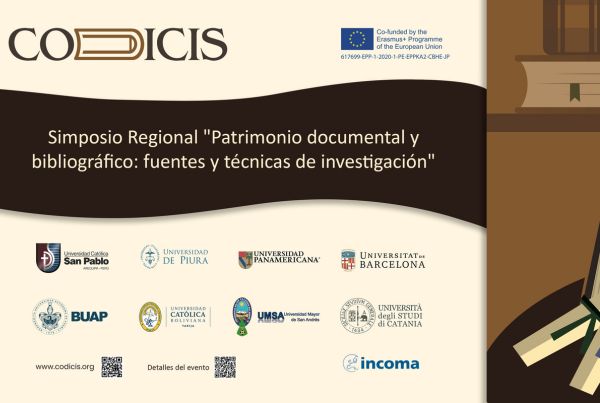
The members of the Codicis project are the Benemérita Autonomous University of Puebla and the University panameric, both from Mexico. The universities are from Bolivia Bolivian Catholic Saint Paul and Mayor of San Andrés. From Spain, the University of Barcelona and the Incoma agency. For Italy, the University of Catania and from Peru, in addition to the San Pablo that leads it and the University of Piura.

Arequipa, January 9, 2022

See the note on the original site: Here

San Pablo held an international symposium management conservation books ancient documents

By News

The San Pablo Catholic University (UCSP), received two leading experts on bibliographic heritage, this during its Research Week. They participated in the project Symposium codicis, which is led by San Pablo and seeks the preservation of documentary heritage, through the training of personnel for its management, recovery and conservation.

They are Mercedes Salomón Salazar, director of the historical library 'José María Lafragua', of the Benemérita Universidad Autónoma de Puebla (Mexico) and Gerardo Trillo Auqui, expert in Library Science, with vast experience in the National Library.

Mercedes Salomón announced the work she has been doing in Mexico, to digitize the old books 'From the shelf to the web and back to the shelf'. In that regard, he clarified that this is one more step in the conservation of documentary heritage, but it is not all. “Digitization must be carried out following conservation standards. Furthermore, the files expire and you have to be changing and updating the system where the repository is located,” said the specialist.

Although the great advantage of digitization is that researchers can consult any document, without having to go to the library or mistreat the document, for this to be correct, the books must be inventoried and cataloged depending on their age, their rarity, among others. other characteristics that make them unique.

Gerardo Trillo commented on the work carried out in the National Library of Peru for the conservation of books that are considered heritage. He recalled that these must be appraised (put a price on them), not with the desire to market them, but to know the cost to catalog the specimens.

The Bicentennial Project stood out, in which an inventory of the collection of the renowned historian Jorge Basadre was made in the city of Tacna, a work that was recently completed. “Recognizing that this is a complex process that has different stages allowed us to do a good job with basic tools,” he said.

The expert highlighted that inventorying the books will also prevent them from being trafficked. “You don't know the number of times we have had to go rescue texts from Customs,” he commented. He recalled that there are already policies for public libraries, since 2018, which has helped the texts to remain in good condition.

The specialists held conferences and participated in discussions with staff from libraries and other institutions that have ancient collections, as well as with teachers and staff from San Pablo who do the same. These were spaces for dialogue to learn, first-hand, the needs and opportunities for the conservation of ancient texts.

Codicis in La San Pablo

The San Pablo Catholic University is in charge of coordinating the international Codicis project. This is an important achievement for our country and Latin America, as it promotes the enhancement of the documentary and bibliographic heritage of Peru, Mexico and Bolivia, through the training of professors from universities in those countries, in the recovery, conservation and authorization of ancient collections. .
In addition, San Pablo has experience in this field. Thus he recovered and digitized the archives of emblematic Arequipa newspapers such as La Bolsa, El Deber and El Republicano, and with this, part of our history.

The members of the Codicis project are the Benemérita Autonomous University of Puebla and the University panameric, both from Mexico. The universities are from Bolivia Bolivian Catholic Saint Paul and Mayor of San Andrés. From Spain, the University of Barcelona and the Incoma agency. For Italy, the University of Catania and from Peru, in addition to the San Pablo that leads it and the University of Piura.

Arequipa, January 9, 2022

See the note on the original site: Here

Documentary bibliographic heritage: experts from Europe will provide free training for its conservation

By Press releases

As part of the Erasmus+ Codicis project, coordinated by the San Pablo Catholic University

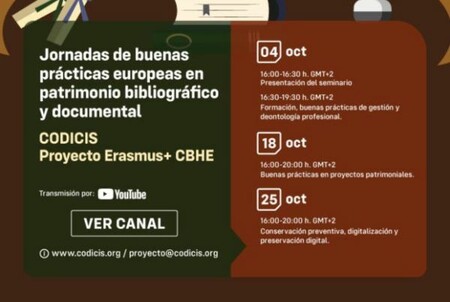
On October 4, 18 and 25, 2021, the project's “European Good Practices Conference on Bibliographic and Documentary Heritage” will be held. codicis. This is a series of training conferences given by experts from different European organizations and the universities of Barcelona and Seville in Spain and Catania and Udine in Italy.

Access to the conferences is free of charge. They will be broadcast on the YouTube channel of the University of Barcelona: www.youtube.com/user/FBiDUB from 9:00 a.m. in Peru, the schedule is repeated in Mexico, in Bolivia it will be at 10:00 a.m. and in Spain at 4:00 p.m. This schedule will be met on all dates of the day.

Codicis is an international project to strengthen capacities for the recovery and conservation of documentary and bibliographic heritage in Latin America. It is coordinated by the San Pablo Catholic University (UCSP). With the conferences, its members seek to transmit the experiences and knowledge of important European leaders in these matters.

The first date, Monday, October 4, will deal with university training in documentation, the management of university documentary heritage and finally they will talk about the ethical aspects of heritage management.

In the second session, on October 18, they will speak on good practices in the study and dissemination of heritage with conferences on dissemination strategies applied in European entities, a project to rescue incunabula texts in southern Italy and on a model for the conservation, management and dissemination of ecclesiastical archives. 

On October 25, the third date, they will discuss preventive conservation and digital preservation. In this case, the experience of the restoration laboratory of the University of Barcelona will be shared and then the same will be done from the University of Udine in Italy. The entire day will culminate with a round table on digitization and preservation.

Among the speakers, Ernest Abadal, vice-rector of the University of Barcelona, Eduardo Peñalver, responsible for the documentary and bibliographic heritage collections of the University of Seville, stand out; Neus Verger from the reserve fund of the University of Barcelona; Simona Inserra, coordinator of a project to study incunabula books; Montserrat Florensa and Anna Rossell, book and document restorers; Alberto Campagnolo, specialist in dissemination and study of digitized bibliographic heritage, among other experts in digital preservation and innovative documentation projects.

The Codicis project is co-financed by the European Union. It was one of the winners of the competitive funds of the Erasmus + program in 2019. Its execution began this year and will last 3 years. Universities from Peru, Bolivia and Mexico, and higher education institutions from Spain and Italy participate. More information in https://www.codicis.org/.

The members for Peru are the San Pablo Catholic University (project coordinator) and the University of Piura. For Mexico, the Benemérita Autonomous University of Puebla and the Pan American University Guadalajara headquarters. For Bolivia, the University of San Andres and the Bolivian Catholic University San Pablo in Tarija and throughout Europe, the University of Catania, Italy and the University of Barcelona; Spain. Added to them is the International Consulting and Mobility Agency (Incoma) from Seville, Spain.

Arequipa, October 1, 2021

See the original note: Here

Documentary bibliographic heritage: experts from Europe will provide free training for its conservation

By News

As part of the Erasmus+ Codicis project, coordinated by the San Pablo Catholic University

On October 4, 18 and 25, the project's “European Good Practices Conference on Bibliographic and Documentary Heritage” will be held. codicis. This is a series of training conferences given by experts from different European organizations and the universities of Barcelona and Seville in Spain and Catania and Udine in Italy.

Access to the conferences is free of charge. They will be broadcast on the YouTube channel of the University of Barcelona: www.youtube.com/user/FBiDUB from 9:00 a.m. in Peru, the schedule is repeated in Mexico, in Bolivia it will be at 10:00 a.m. and in Spain at 4:00 p.m. This schedule will be met on all dates of the day.

Codicis is an international project to strengthen capacities for the recovery and conservation of documentary and bibliographic heritage in Latin America. It is coordinated by the San Pablo Catholic University (UCSP). With the conferences, its members seek to transmit the experiences and knowledge of important European leaders in these matters.

The first date, Monday, October 4, will deal with university training in documentation, the management of university documentary heritage and finally they will talk about the ethical aspects of heritage management.

In the second session, on October 18, they will speak on good practices in the study and dissemination of heritage with conferences on dissemination strategies applied in European entities, a project to rescue incunabula texts in southern Italy and on a model for the conservation, management and dissemination of ecclesiastical archives. 

On October 25, the third date, they will discuss preventive conservation and digital preservation. In this case, the experience of the restoration laboratory of the University of Barcelona will be shared and then the same will be done from the University of Udine in Italy. The entire day will culminate with a round table on digitization and preservation.

Among the speakers, Ernest Abadal, vice-rector of the University of Barcelona, Eduardo Peñalver, responsible for the documentary and bibliographic heritage collections of the University of Seville, stand out; Neus Verger from the reserve fund of the University of Barcelona; Simona Inserra, coordinator of a project to study incunabula books; Montserrat Florensa and Anna Rossell, book and document restorers; Alberto Campagnolo, specialist in dissemination and study of digitized bibliographic heritage, among other experts in digital preservation and innovative documentation projects.

The Codicis project is co-financed by the European Union. It was one of the winners of the competitive funds of the Erasmus + program in 2019. Its execution began this year and will last 3 years. Universities from Peru, Bolivia and Mexico, and higher education institutions from Spain and Italy participate. More information in https://www.codicis.org/.

The members for Peru are the San Pablo Catholic University (project coordinator) and the University of Piura. For Mexico, the Benemérita Autonomous University of Puebla and the Pan American University Guadalajara headquarters. For Bolivia, the University of San Andres and the Bolivian Catholic University San Pablo in Tarija and throughout Europe, the University of Catania, Italy and the University of Barcelona; Spain. Added to them is the International Consulting and Mobility Agency (Incoma) from Seville, Spain.

Arequipa, October 1, 2021

See the original note: Here
The Bolivian Catholic University joins the CODICIS project for the recovery and conservation of documentary heritage

By Press releases

The CODICIS project is made up of a consortium of 5 universities from Peru and Mexico and two universities from Spain and Italy that works for the recovery and conservation of the documentary and bibliographic heritage of Latin America and Europe.

This project is funded by ERASMUS of the European Union and aims to train professors from universities in those countries for teaching in the recovery, conservation and authorization for research of important heritage collections.

In an academic event, the CODICIS project was presented with the participation of academic authorities from the “San Pablo” Catholic University of Arequipa, the University of Piura (Peru), the Autonomous University of Puebla, the Pan American University in Guadalajara (Mexico) and the Bolivian Catholic University. “San Pablo” and Universidad Mayor de San Andrés (Bolivia).

The European peers are the University of Catania (Italy) and the University of Barcelona (Spain).

In his speech, Father José Fuentes Cano, National Rector of the UCB, stated that: “a person who forgets his history does not know himself at all, with serious damage to his identity and his personal being; “A country that does not know its history has no roots and is at the mercy of fashions and lies.”

With these opening words, the national rector highlighted the importance of the CODICIS project for the Bolivian Catholic University for being an action that benefits society and a valuable opportunity for international university cooperation that strengthens inter-institutional relationships and the development of academic networks. for the benefit of higher education.

Likewise, he highlighted the specific collaboration to the CODICIS project that academics from the Tarija Regional Academic Unit carry out in favor of the conservation of the bibliographic heritage of Bolivia.

In turn, José Loaiza, Regional Rector of the Tarija headquarters of the UCB, expressed his gratitude to the entire consortium of universities that are part of this project, “there is no doubt about the importance of knowing and recognizing our identity to define a common destiny.” to have shared visions of the people.”

He also highlighted that in the city of Tarija there are documents and bibliographies that highlight the historical heritage such as the Tomás O'connor D'arlach and Carlo Casap libraries, and particularly the Franciscan Ecclesial Documentation Center, cataloged as the most important internationally.

See the note on the original site: Here

en_GB