The conservation and dissemination of our documentary heritage is essential for the consolidation of our identity as a country.
The conservation and dissemination of our documentary heritage is essential for the consolidation of our identity as a country.
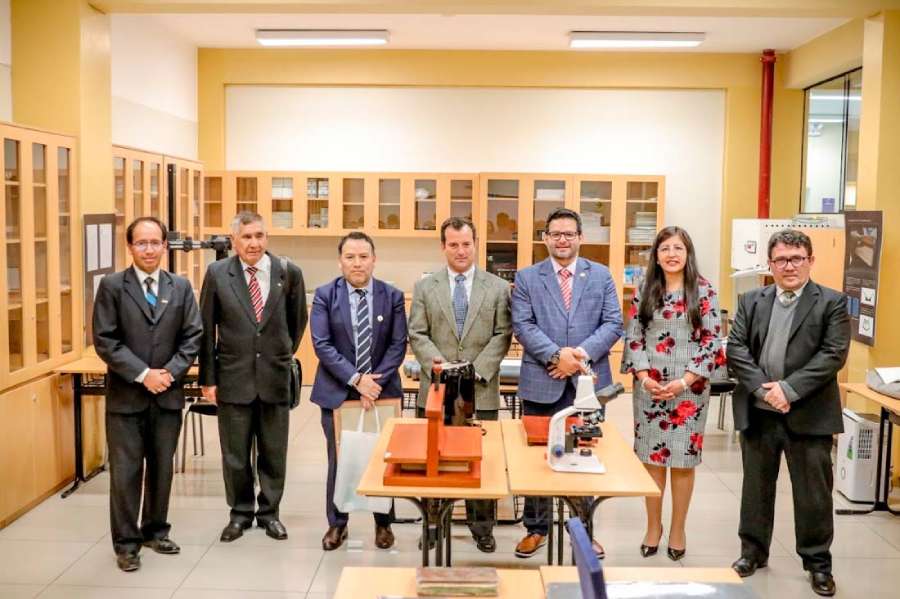
The San Pablo Catholic University (UCSP) has implemented, within the framework of the Codicis project, the first and only documentary conservation laboratory in Arequipa and the south of the country.
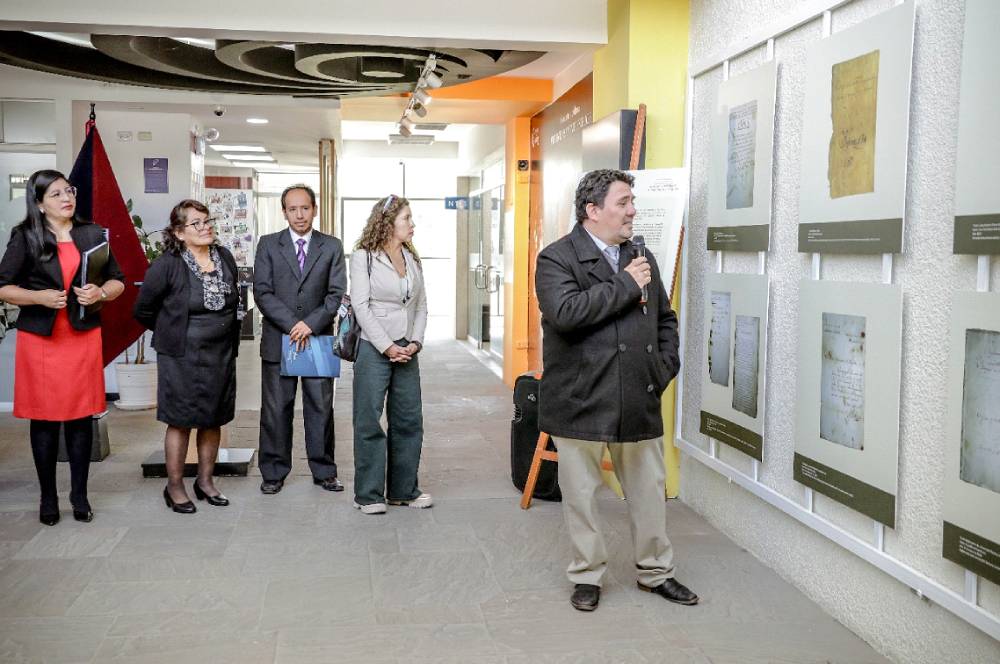
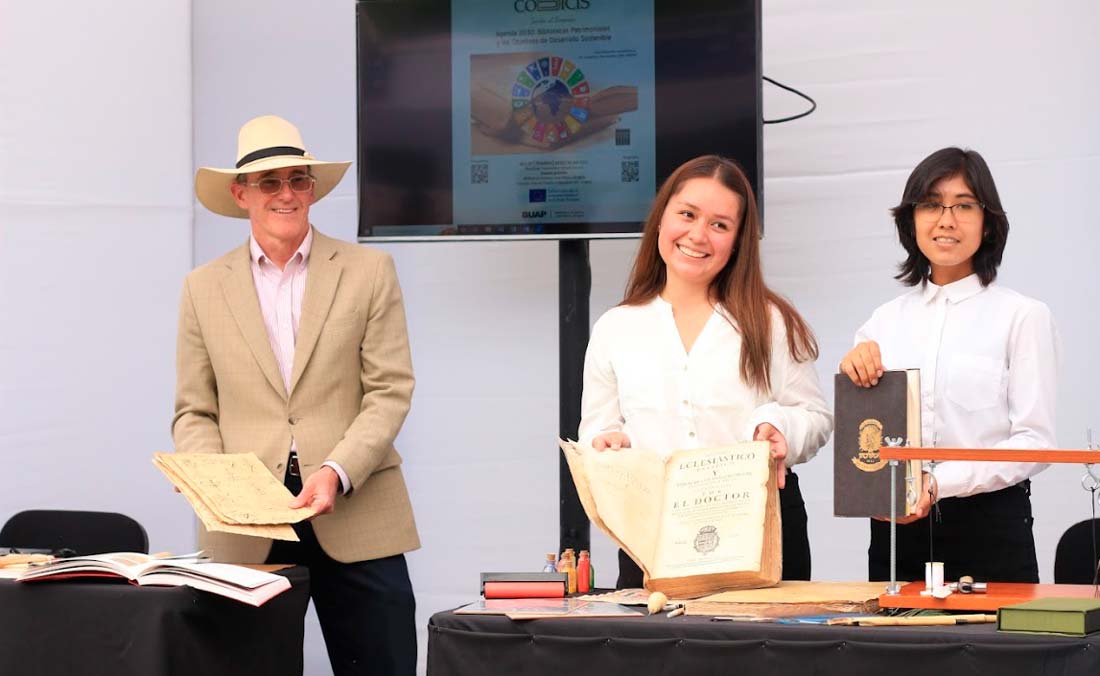
He curated and digitized part of the Municipal Museum archive, which is on display until May 22, 2023.
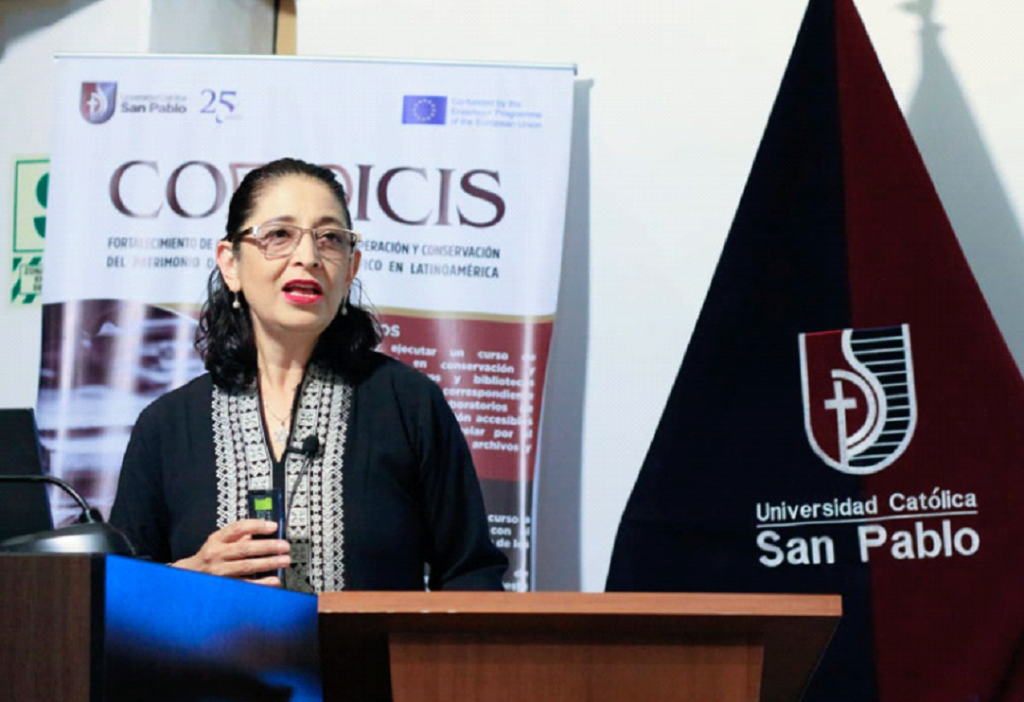
On Monday, the San Pablo Catholic University (UCSP) began its Research Week. They will carry out about 30 activities, until Friday, November 11, at their San Lázaro campus.

Within the framework of the international project Codicis, which is financed by the European Union
In order to improve the protection of the documentary heritage in Arequipa, the San Pablo Catholic University (UCSP), carried out the training course for trainers in management and conservation of archives and heritage libraries. This training is part of the international project codicis, led by UCSP and financed by the Erasmus+ program of the European Union.
The course seeks to have more specialized personnel who understand the value of ancient documents and texts and know how to handle them, since it is the first thing required for their conservation and management. It was aimed at members of San Pablo who were instructed by experts from Spain and Italy for 5 months, from September 2022 to January 2023.
The topics they discussed were: history of the book, digitization of ancient texts, preservation and conservation of bibliographic and heritage material; and management of heritage centers. The sessions were hybrid (virtual and in-person) and included theoretical and practical activities.
There were 9 participants in the training. They will be instructors in the replication courses contemplated by the Codicis project, along with other specialists from the partner universities of this initiative. In these replication courses, librarians and archivists from different cities in the country will be trained, who will receive scholarships to be part of this training.
The graduates of the course are Enrique Briceño Medina, director of the UCSP Library, Carmen Chávez Núñez, Edwin Montes Fernández, Tania Ramírez Cabrera, Henry Vílchez Chávez and Justo Noguera Almanza, staff from the same area; Patricia Calvi de Quintanilla and Lucía Galdos Arenas, director and administrator of the San Pablo Editorial Fund, respectively; and Andrea Ocampo Maceda, teaching assistant at the same university.
Codicis is a project that brings together 9 institutions from Peru, Bolivia, Mexico, Spain and Italy, seeking to strengthen capacities for the recovery and conservation of documentary and bibliographic heritage in Latin America and is being carried out under the leadership of the Center for Peruvian Studies of the Saint Paul.
The other partner institutions with the UCSP are: University of Piura (Peru), the Benemérita Autonomous University of Puebla and University panameric (both from Mexico), the Universities Mayor of San Andrés and Bolivian Catholic Saint Paul (both from Bolivia) and the universities of Barcelona and Incoma (both from Spain) and Catania (Italy).
“The Codicis project is concerned with the protection of heritage and culture, which helps us understand our identity as Peruvians. The training time has been hard work, now our graduates have the task of training more people to protect our documentary heritage,” said Mgtr. Pamela Cabala, coordinator of the Codicis project and director of the Center for Peruvian Studies at UCSP.
For his part, the rector of San Pablo, Alonso Quintanilla, highlighted the importance of the Codicis project, as it is the largest among all those that this university executes together with the European Union. “San Pablo is very committed to this initiative, as it makes us come back into contact with books from another perspective, a scientific and poetic perspective,” he said after congratulating the graduates of the training course and asking them to make their efforts pay off. fruits in favor of the cultural heritage of the region and the country.
The second part of the Codicis project includes the implementation of a conservation and restoration laboratory among the affiliated universities. It should be noted that San Pablo already has this environment, which, together with the digitization laboratory of 2014, has been working on the rescue of collections of ancient documents and texts.
It should be noted that the UCSP already has experience in this work, as it has cataloged and digitized historical newspapers such as La Bolsa, El Republicano, El Deber, the correspondence of former president José Luis Bustamante and Rivero, and has new projects underway.
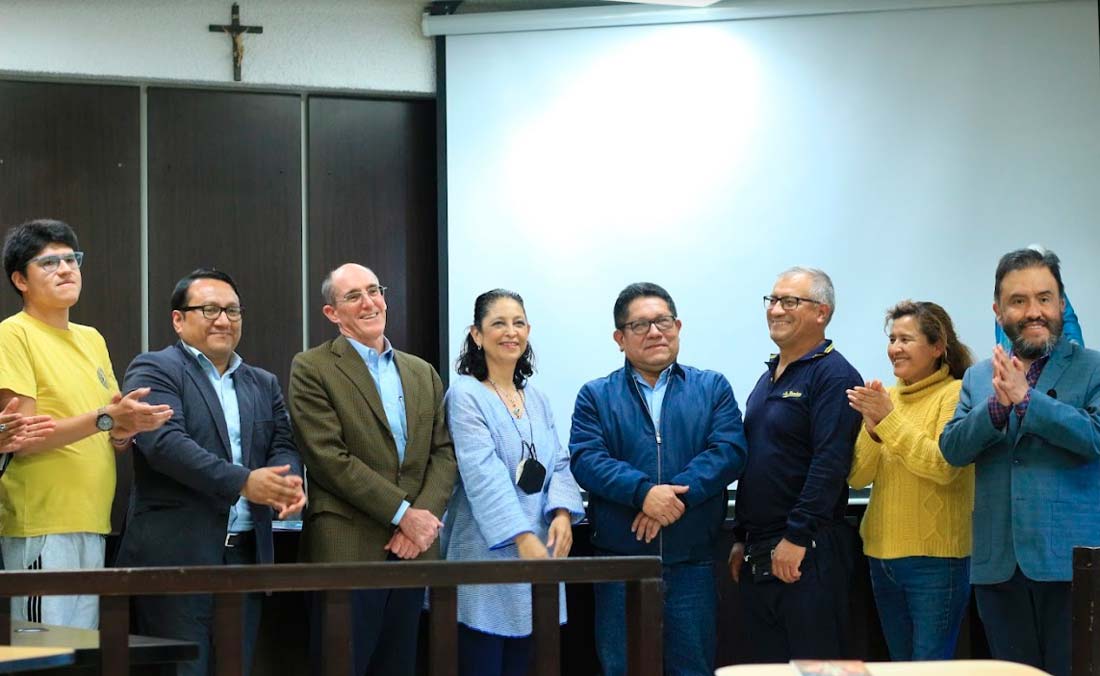
The graduation ceremony took place in the facilities of the Víctor Andrés Belaúnde Library of San Pablo. The UCSP Research Director, Dr. Patricia Castillo Araníbar, also participated in this activity.
Arequipa, May 10, 2023
See original note: Here

Course was held in San Pablo within the framework of the international project Codicis
Specialists from the University of Barcelona and the University of Catania arrived at the San Pablo Catholic University (UCSP) in January 2023. They taught classes and held training workshops, within the framework of the international project Codicis, which seeks to strengthen capacities for the recovery and conservation of documentary and bibliographic heritage in Latin America.
Berta Blasi, expert in Conservation and Restoration of Graphic Documents, and Simona Inserra, researcher in Archival Science and Library Science, participated from the University of Catania. Also, Miquel Térmens, dean of the Faculty of Information and Audiovisual Media and Jesús Gascón García, graduate in Documentation, both from the University of Barcelona.
They discussed conservation, digitization of ancient documents and the history of the book. San Pablo personnel who work in areas related to the management and production of books and other texts and personnel from the University of Piura, who also arrived in Arequipa for this course, received the training for 10 days. Both study houses make up the Codicis project in Peru. Similar courses have been held in Bolivia and Mexico, partner countries of this initiative.
San Pablo is the leading university of this initiative that brings together 9 institutions from Europe and Latin America. It is co-financed by the European Union (EU) through the Erasmus+ program. Its development is possible thanks to the fact that this academic institution won one of the EU calls. Currently, it is in its third year of execution.
The UCSP professor and project coordinator, Francisco Rizo Patrón, explained that this first training was for personnel from the partner universities in Peru, because it is the prelude to the training course that will be carried out with personnel from other institutions that work with documentary heritage. and ancient texts. This course will be held this year in Arequipa. Participants will be selected and will receive an invitation to apply, as there will be no cost.
He also specified that it is a complete training, since the management of documentary heritage does not only imply its digitization, that is, transferring physical texts to virtual formats, as is usually thought, but also requires a series of previous steps, as well as actions that bring this material closer to the population so that they know how to value it.
In the course carried out at the UCSP, use was also made of the new conservation and management of heritage collections laboratory at San Pablo, and visits were made to archival and library heritage centers in our city.
In addition to the partners from Peru, Spain and Italy, the Benemérita Universidad Autónoma de Puebla and the Universidad Panamericana, both from Mexico, are part of Codicis. The universities Mayor de San Andrés and Católica Boliviana San Pablo and Incoma, a Spanish research and research consultancy, are part of Bolivia.
Arequipa, February 2023
See original note: Here
Conversando con is a program produced by the San Pablo Catholic University (UCSP) in which specialists who visit the UCSP are interviewed. This edition included the participation of Mercedes Salomón Salazar, director of the 'José María Lafragua' historical library, of the Benemérita Autonomous University of Puebla (Mexico) and Gerardo Trillo Auqui, expert in Library Science, with vast experience in the National Library of Peru.
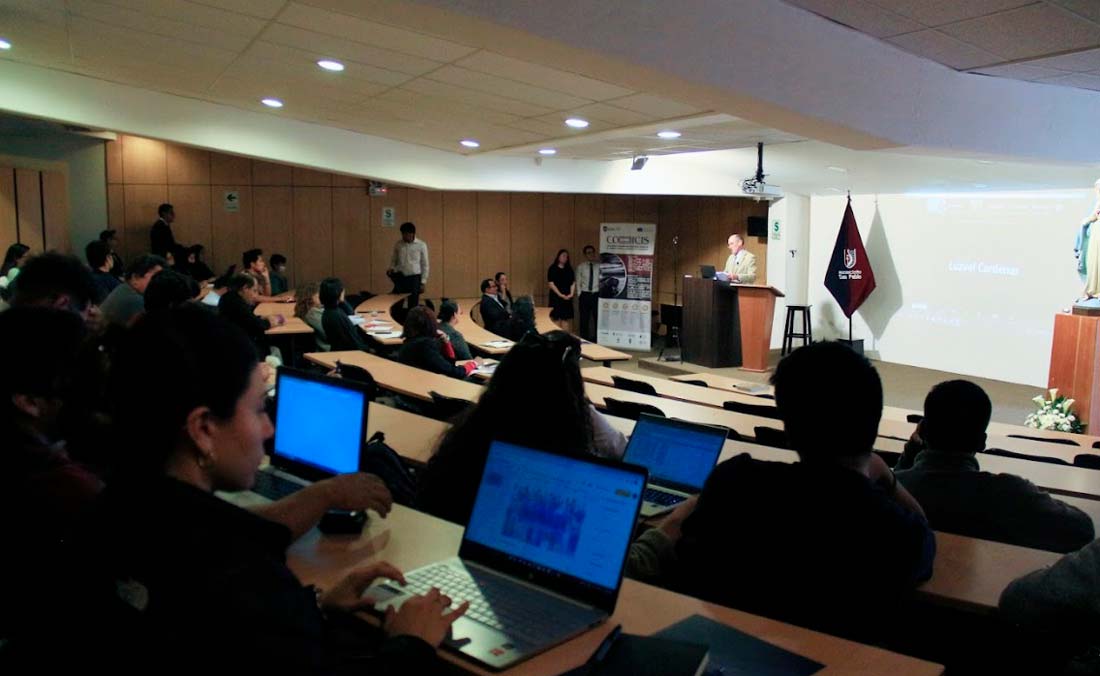
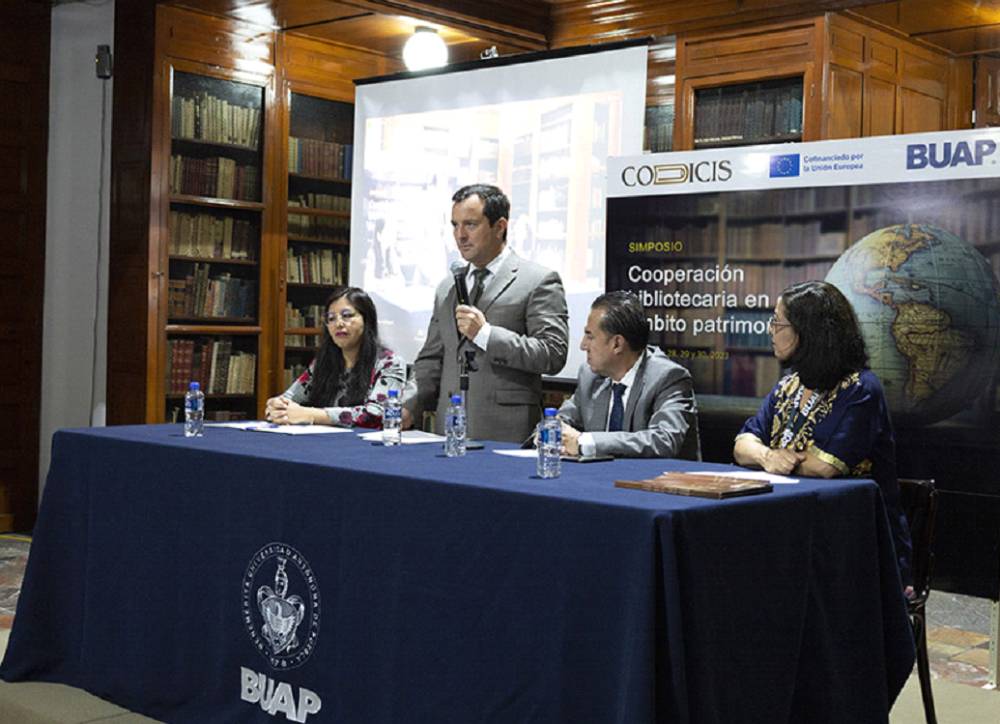
Both specialists arrived at San Pablo in November 2023, within the framework of the project's International Symposium. codicis, which seeks the preservation of documentary heritage, through the training of personnel for its management, recovery and conservation. This event was part of UCSP Research Week.
In this interview broadcast in February of this year they discussed the value of heritage documentation and its digitization.
The San Pablo Catholic University (UCSP), in November 2022, received two leading experts on bibliographic heritage, this during its Research Week. They participated in the Symposium of the Codicis project, which is led by San Pablo and seeks the preservation of documentary heritage, through the training of personnel for its management, recovery and conservation.
They are Mercedes Salomón Salazar, director of the historical library 'José María Lafragua', of the Benemérita Universidad Autónoma de Puebla (Mexico) and Gerardo Trillo Auqui, expert in Library Science, with vast experience in the National Library.
Mercedes Salomón announced the work she has been doing in Mexico, to digitize the old books 'From the shelf to the web and back to the shelf'. In that regard, he clarified that this is one more step in the conservation of documentary heritage, but it is not all. “Digitization must be carried out following conservation standards. Furthermore, the files expire and you have to be changing and updating the system where the repository is located,” said the specialist.
Although the great advantage of digitization is that researchers can consult any document, without having to go to the library or mistreat the document, for this to be correct, the books must be inventoried and cataloged depending on their age, their rarity, among others. other characteristics that make them unique.
Gerardo Trillo commented on the work carried out in the National Library of Peru for the conservation of books that are considered heritage. He recalled that these must be appraised (put a price on them), not with the desire to market them, but to know the cost to catalog the specimens.
The Bicentennial Project stood out, in which an inventory of the collection of the renowned historian Jorge Basadre was made in the city of Tacna, a work that was recently completed. “Recognizing that this is a complex process that has different stages allowed us to do a good job with basic tools,” he said.
The expert highlighted that inventorying the books will also prevent them from being trafficked. “You don't know the number of times we have had to go rescue texts from Customs,” he commented. He recalled that there are already policies for public libraries, since 2018, which has helped the texts to remain in good condition.
The specialists held conferences and participated in discussions with staff from libraries and other institutions that have ancient collections, as well as with teachers and staff from San Pablo who do the same. These were spaces for dialogue to learn, first-hand, the needs and opportunities for the conservation of ancient texts.
The San Pablo Catholic University is in charge of coordinating the international Codicis project. This is an important achievement for our country and Latin America, as it promotes the enhancement of the documentary and bibliographic heritage of Peru, Mexico and Bolivia, through the training of professors from universities in those countries, in the recovery, conservation and authorization of ancient collections. .
In addition, San Pablo has experience in this field. Thus he recovered and digitized the archives of emblematic Arequipa newspapers such as La Bolsa, El Deber and El Republicano, and with this, part of our history.
The members of the Codicis project are the Benemérita Autonomous University of Puebla and the University panameric, both from Mexico. The universities are from Bolivia Bolivian Catholic Saint Paul and Mayor of San Andrés. From Spain, the University of Barcelona and the Incoma agency. For Italy, the University of Catania and from Peru, in addition to the San Pablo that leads it and the University of Piura.
Arequipa, January 9, 2022
See the note on the original site: Here
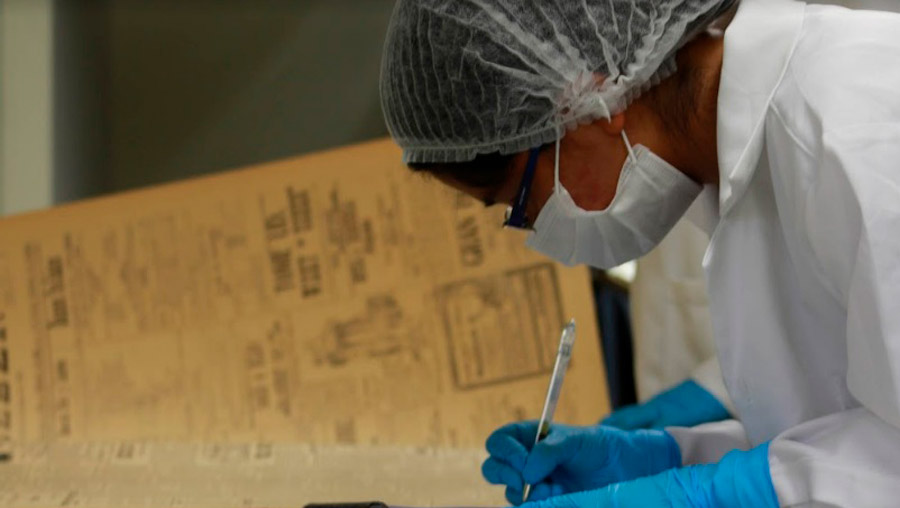
As part of the Erasmus+ Codicis project, coordinated by the San Pablo Catholic University
On October 4, 18 and 25, 2021, the project's “European Good Practices Conference on Bibliographic and Documentary Heritage” will be held. codicis. This is a series of training conferences given by experts from different European organizations and the universities of Barcelona and Seville in Spain and Catania and Udine in Italy.
Access to the conferences is free of charge. They will be broadcast on the YouTube channel of the University of Barcelona: www.youtube.com/user/FBiDUB from 9:00 a.m. in Peru, the schedule is repeated in Mexico, in Bolivia it will be at 10:00 a.m. and in Spain at 4:00 p.m. This schedule will be met on all dates of the day.
Codicis is an international project to strengthen capacities for the recovery and conservation of documentary and bibliographic heritage in Latin America. It is coordinated by the San Pablo Catholic University (UCSP). With the conferences, its members seek to transmit the experiences and knowledge of important European leaders in these matters.
The first date, Monday, October 4, will deal with university training in documentation, the management of university documentary heritage and finally they will talk about the ethical aspects of heritage management.
In the second session, on October 18, they will speak on good practices in the study and dissemination of heritage with conferences on dissemination strategies applied in European entities, a project to rescue incunabula texts in southern Italy and on a model for the conservation, management and dissemination of ecclesiastical archives.
On October 25, the third date, they will discuss preventive conservation and digital preservation. In this case, the experience of the restoration laboratory of the University of Barcelona will be shared and then the same will be done from the University of Udine in Italy. The entire day will culminate with a round table on digitization and preservation.
Among the speakers, Ernest Abadal, vice-rector of the University of Barcelona, Eduardo Peñalver, responsible for the documentary and bibliographic heritage collections of the University of Seville, stand out; Neus Verger from the reserve fund of the University of Barcelona; Simona Inserra, coordinator of a project to study incunabula books; Montserrat Florensa and Anna Rossell, book and document restorers; Alberto Campagnolo, specialist in dissemination and study of digitized bibliographic heritage, among other experts in digital preservation and innovative documentation projects.
The Codicis project is co-financed by the European Union. It was one of the winners of the competitive funds of the Erasmus + program in 2019. Its execution began this year and will last 3 years. Universities from Peru, Bolivia and Mexico, and higher education institutions from Spain and Italy participate. More information in https://www.codicis.org/.
The members for Peru are the San Pablo Catholic University (project coordinator) and the University of Piura. For Mexico, the Benemérita Autonomous University of Puebla and the Pan American University Guadalajara headquarters. For Bolivia, the University of San Andres and the Bolivian Catholic University San Pablo in Tarija and throughout Europe, the University of Catania, Italy and the University of Barcelona; Spain. Added to them is the International Consulting and Mobility Agency (Incoma) from Seville, Spain.
Arequipa, October 1, 2021
See the original note: Here
As part of the Erasmus+ Codicis project, coordinated by the San Pablo Catholic University
On October 4, 18 and 25, the project's “European Good Practices Conference on Bibliographic and Documentary Heritage” will be held. codicis. This is a series of training conferences given by experts from different European organizations and the universities of Barcelona and Seville in Spain and Catania and Udine in Italy.
Access to the conferences is free of charge. They will be broadcast on the YouTube channel of the University of Barcelona: www.youtube.com/user/FBiDUB from 9:00 a.m. in Peru, the schedule is repeated in Mexico, in Bolivia it will be at 10:00 a.m. and in Spain at 4:00 p.m. This schedule will be met on all dates of the day.
Codicis is an international project to strengthen capacities for the recovery and conservation of documentary and bibliographic heritage in Latin America. It is coordinated by the San Pablo Catholic University (UCSP). With the conferences, its members seek to transmit the experiences and knowledge of important European leaders in these matters.
The first date, Monday, October 4, will deal with university training in documentation, the management of university documentary heritage and finally they will talk about the ethical aspects of heritage management.
In the second session, on October 18, they will speak on good practices in the study and dissemination of heritage with conferences on dissemination strategies applied in European entities, a project to rescue incunabula texts in southern Italy and on a model for the conservation, management and dissemination of ecclesiastical archives.
On October 25, the third date, they will discuss preventive conservation and digital preservation. In this case, the experience of the restoration laboratory of the University of Barcelona will be shared and then the same will be done from the University of Udine in Italy. The entire day will culminate with a round table on digitization and preservation.
Among the speakers, Ernest Abadal, vice-rector of the University of Barcelona, Eduardo Peñalver, responsible for the documentary and bibliographic heritage collections of the University of Seville, stand out; Neus Verger from the reserve fund of the University of Barcelona; Simona Inserra, coordinator of a project to study incunabula books; Montserrat Florensa and Anna Rossell, book and document restorers; Alberto Campagnolo, specialist in dissemination and study of digitized bibliographic heritage, among other experts in digital preservation and innovative documentation projects.
The Codicis project is co-financed by the European Union. It was one of the winners of the competitive funds of the Erasmus + program in 2019. Its execution began this year and will last 3 years. Universities from Peru, Bolivia and Mexico, and higher education institutions from Spain and Italy participate. More information in https://www.codicis.org/.
The members for Peru are the San Pablo Catholic University (project coordinator) and the University of Piura. For Mexico, the Benemérita Autonomous University of Puebla and the Pan American University Guadalajara headquarters. For Bolivia, the University of San Andres and the Bolivian Catholic University San Pablo in Tarija and throughout Europe, the University of Catania, Italy and the University of Barcelona; Spain. Added to them is the International Consulting and Mobility Agency (Incoma) from Seville, Spain.
Arequipa, October 1, 2021
See the original note: Here

© 2026 CODICIS. All rights reserved.